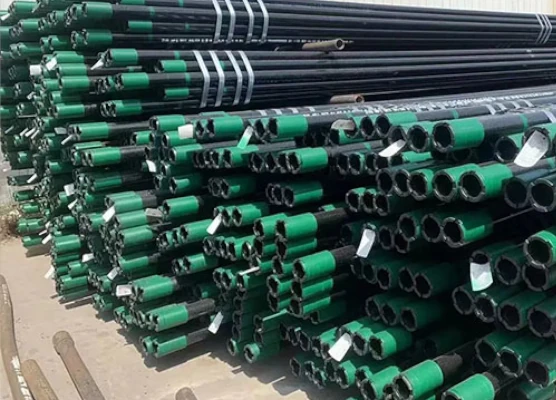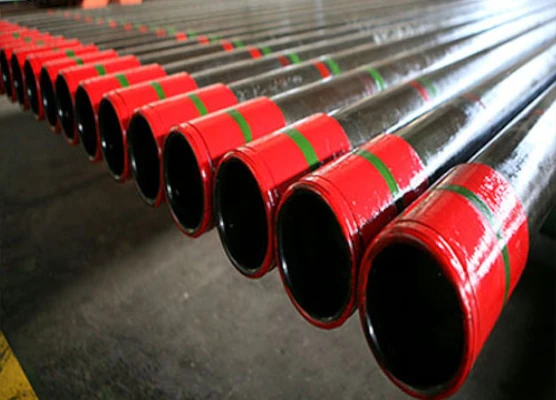



FBE (Fusion Bonded Epoxy) coating is the most widely recognized anti-corrosion solution for buried steel pipelines in the global oil, gas, water supply and chemical industries. Most overseas engineers and procurement clients search Google for standardized FBE coating process, FBE pipe quality standards, and FBE application specifications to verify supplier reliability and project compliance.
Our factory strictly implements FBE anti-corrosion production in accordance with ISO 21809-2, NACE SP0394, AWWA C213 international standards. Every production step is precisely controlled to avoid common defects such as coating blistering, peeling, disbondment and underground corrosion. This article fully explains our standardized FBE pipe manufacturing workflow, quality control rules and technical advantages to help global clients select qualified FBE anti-corrosion steel pipes.
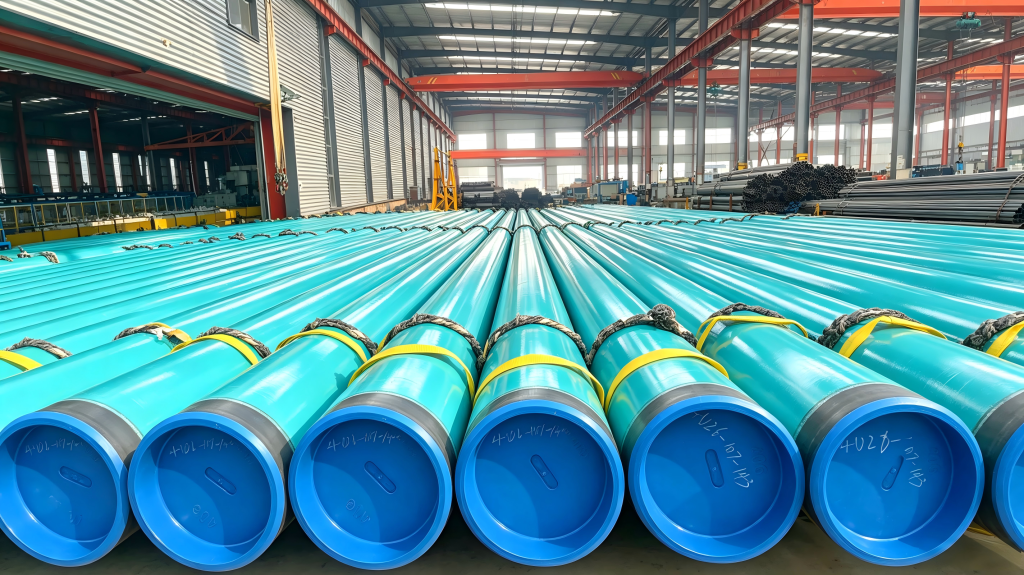
Why Standard FBE Process Matters for Pipeline Projects
Unregulated FBE production is the main cause of short pipeline service life. Many low-cost manufacturers skip strict blasting, precise temperature control and full curing procedures, resulting in coating failure within 5–10 years after underground burial. Poor FBE workmanship leads to pipeline leakage, soil pollution, frequent maintenance and huge project loss.
Professional FBE anti-corrosion pipelines require standardized surface treatment, constant preheating temperature, uniform electrostatic spraying and complete curing treatment. Strict process control can extend the pipeline service life to more than 30 years for buried engineering projects.
Standard FBE Anti-Corrosion Production Process (Step by Step)
1. Steel Pipe Surface Pretreatment (Core Step)
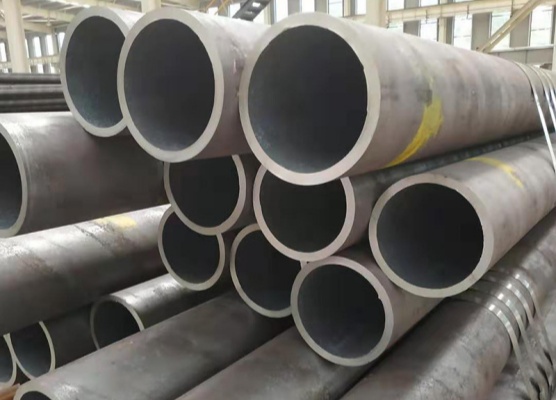
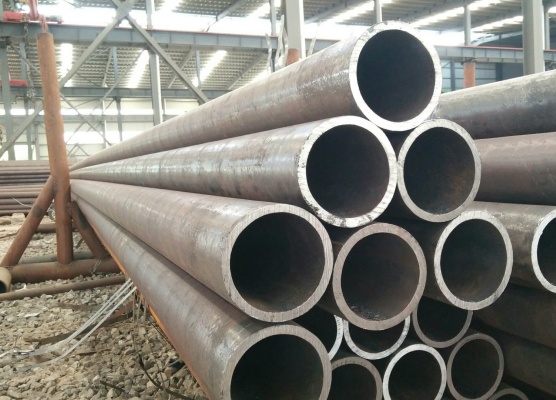
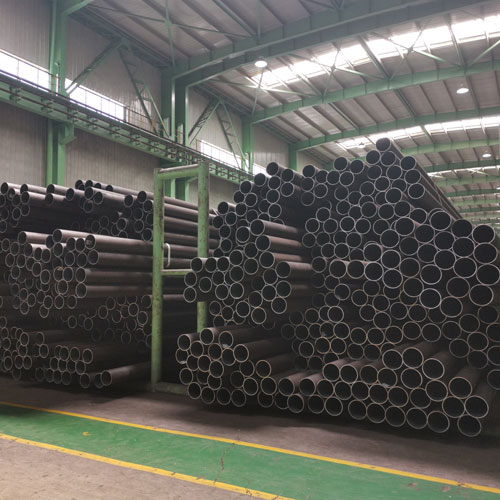
Surface treatment determines the bonding strength of FBE epoxy coating. All raw steel pipes (seamless, ERW, LSAW, SSAW) will pass strict pre-inspection to remove surface oil, grease and soluble salt.
We adopt professional abrasive blasting treatment to reachSa 2.5 / SSPC-SP10 near-white metal standard. The anchor pattern is controlled at 37–100μm to ensure perfect mechanical adhesion between epoxy powder and steel pipe base. The blasting completion interval is strictly limited within 4 hours to prevent flash rust and ensure coating qualification rate.
2. Precise Induction Preheating
After surface cleaning, the steel pipe enters the closed constant-temperature induction heating system. The heating temperature is accurately controlled at180–250°C (optimal 220–240°C for single-layer FBE).
Stable preheating temperature ensures full melting and cross-linking of FBE epoxy powder. Too low temperature causes insufficient adhesion; excessive temperature leads to epoxy aging and coating cracking. Our production line supports real-time temperature monitoring and batch data traceability.
3. Automatic Electrostatic FBE Powder Spraying
The preheated grounded steel pipe rotates evenly on the conveyor and enters the dust-free spraying workshop. High-voltage electrostatic spraying guns uniformly spray FBE epoxy powder on the inner and outer pipe surfaces.
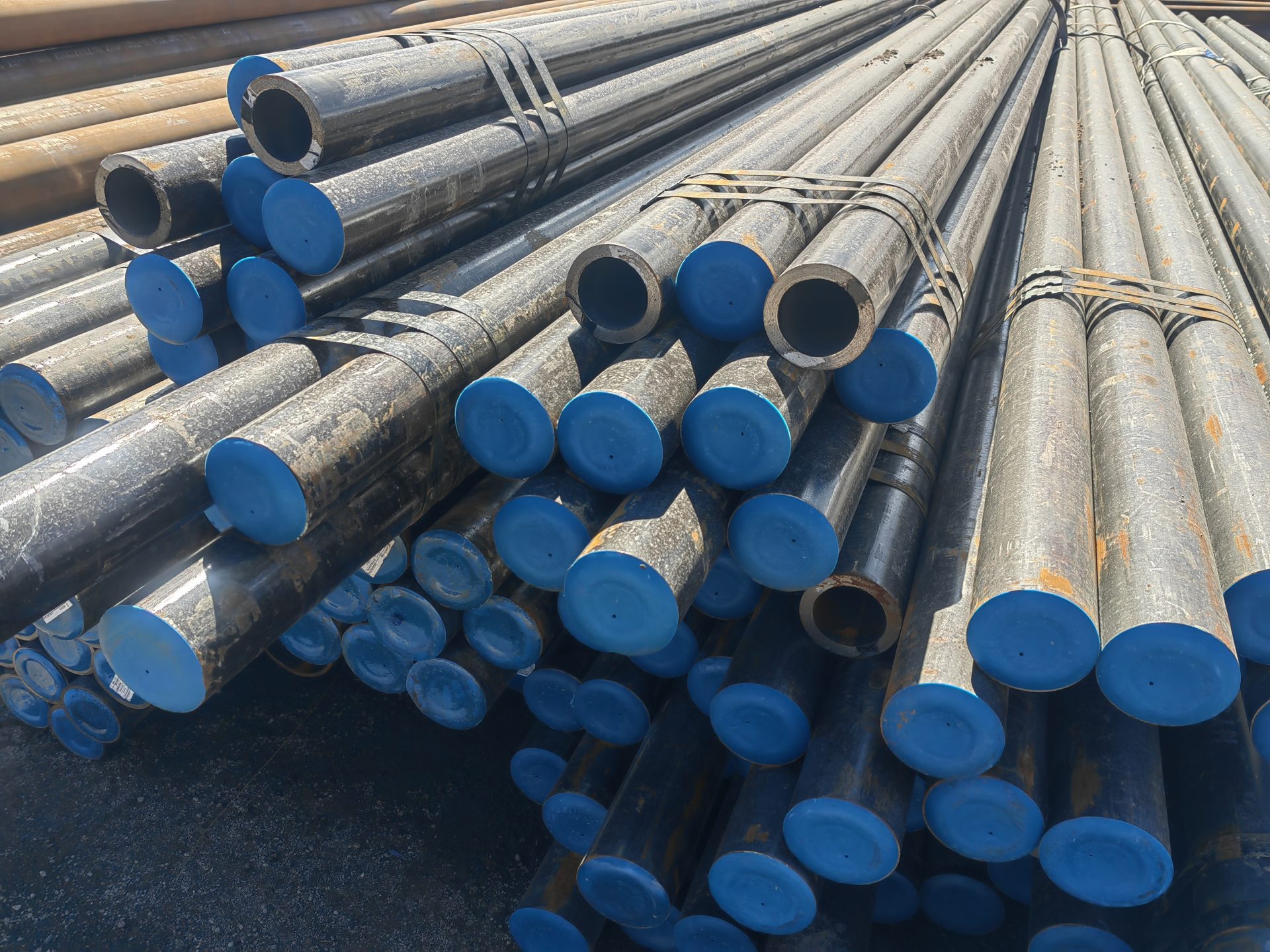
We support single-layer FBE (300–500μm) and double-layer FBE (600–1000μm) coating. The automatic spraying system perfectly covers pipe body, weld joints and pipe ends to avoid missing coating and uneven thickness. The recycled powder system ensures stable coating quality while reducing production cost.
4. Thermal Curing, Cooling & Full QC Inspection
The residual heat of the steel pipe realizes automatic thermal curing of FBE powder, forming a dense, seamless, high-strength epoxy protective film. After curing, the pipes adopt controlled cooling treatment to stabilize coating performance.
Finished products undergo strict full inspection: dry film thickness (DFT) test, adhesion strength test, holiday spark detection, impact resistance test and cathodic disbondment test. All inspection reports can be provided for project bidding and acceptance.
Core Advantages of Our Standard FBE Coated Pipes
- Superior anti-corrosion performance: Resistant to acid, alkali, salt, soil corrosion and sewage erosion, suitable for complex underground environments
- Strong mechanical stability: Excellent impact resistance and bending resistance, not easy to crack during transportation and burial
- Weld-friendly design: On-site welding is allowed, and weld areas can be repaired with matching FBE coating
- Long service life: Stable performance for more than 30 years in buried working conditions
- Full standard compliance: Compliant with ISO 21809, NACE SP0394, AWWA C213 global industry standards
Main Application Scenarios
Oil & gas transmission pipelines, municipal water supply & sewage pipelines, chemical fluid transportation pipelines, geothermal engineering pipelines, fire protection buried pipelines and mining industrial piping systems.